What is Isla de Lobos
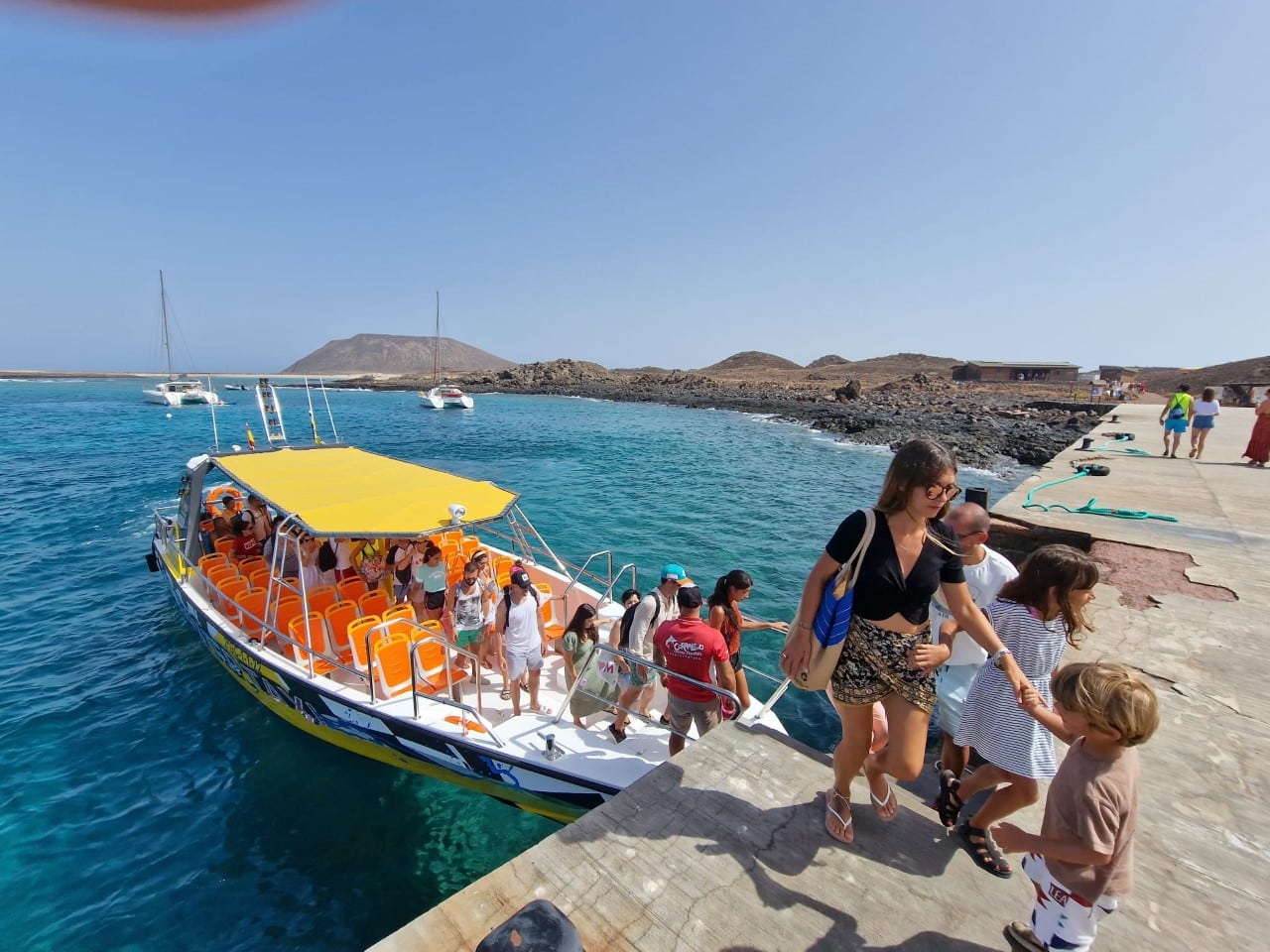
It's a small volcanic islet of about 467 hectares, some 2 km off the north coast of Fuerteventura, in the municipality of La Oliva. It has been protected since 1982 and is now the Islote de Lobos Natural Park. There are no cars, hotels or roads: just dirt paths, turquoise beaches and a handful of houses at El Puertito.
The permit to visit Lobos
To go ashore you need an authorisation from the Cabildo (island council) of Fuerteventura, which limits how many people are on the islet at once to protect it. It's free and there are two ways to get it:
- On your own, on LobosPass, the official permit website. Apply a few days ahead, especially in summer.
- At the port of Corralejo, with your trip's staff, if you go on one of the trips that land on the island.
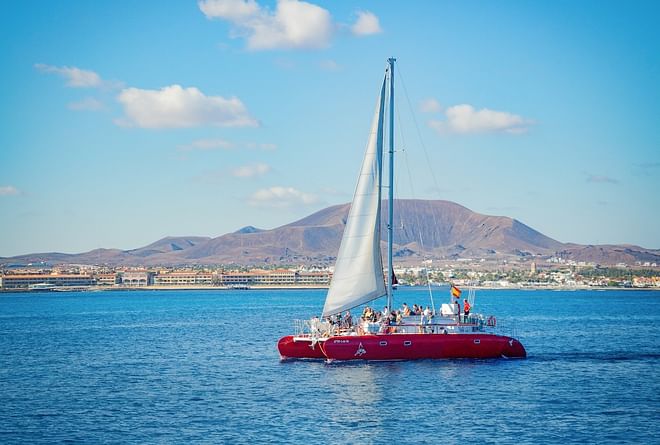
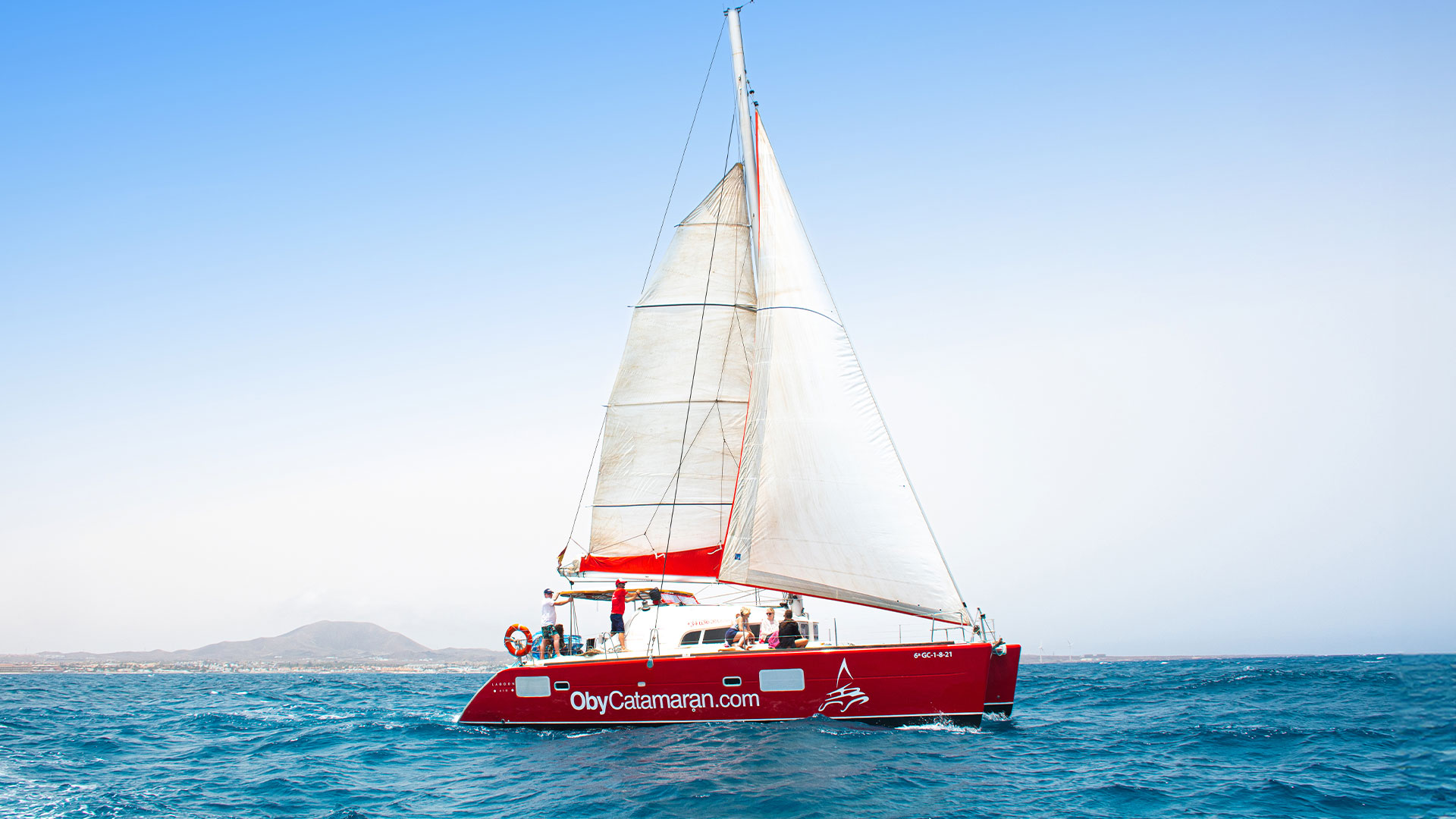
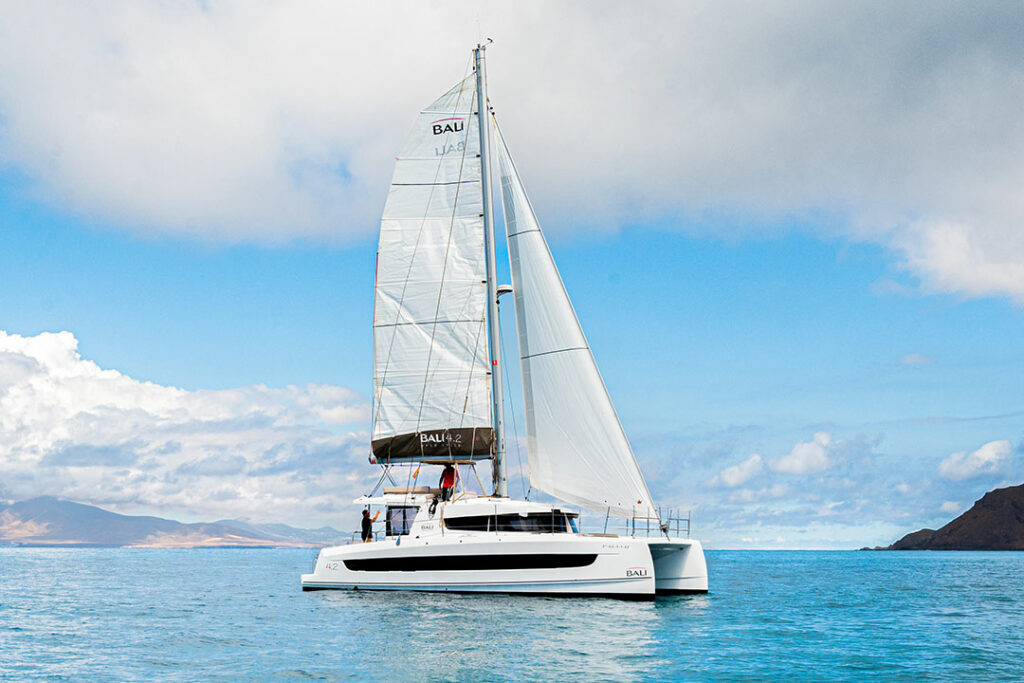
The permit is for a morning or an afternoon slot (the exact times are on LobosPass) and you show it at the Lobos jetty when you land. If you go on a catamaran that anchors off the island without landing, you don't need one.
How to get there
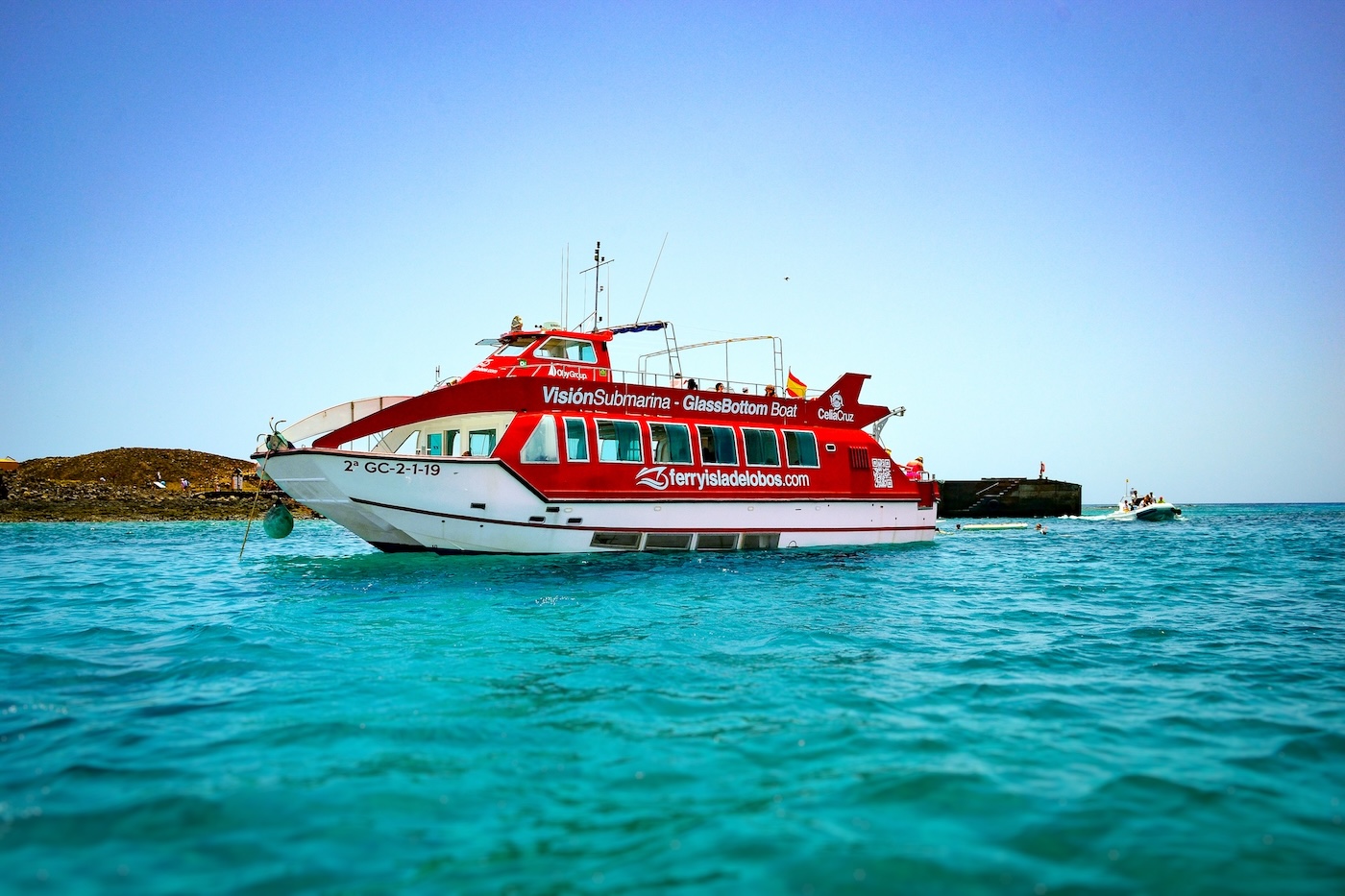
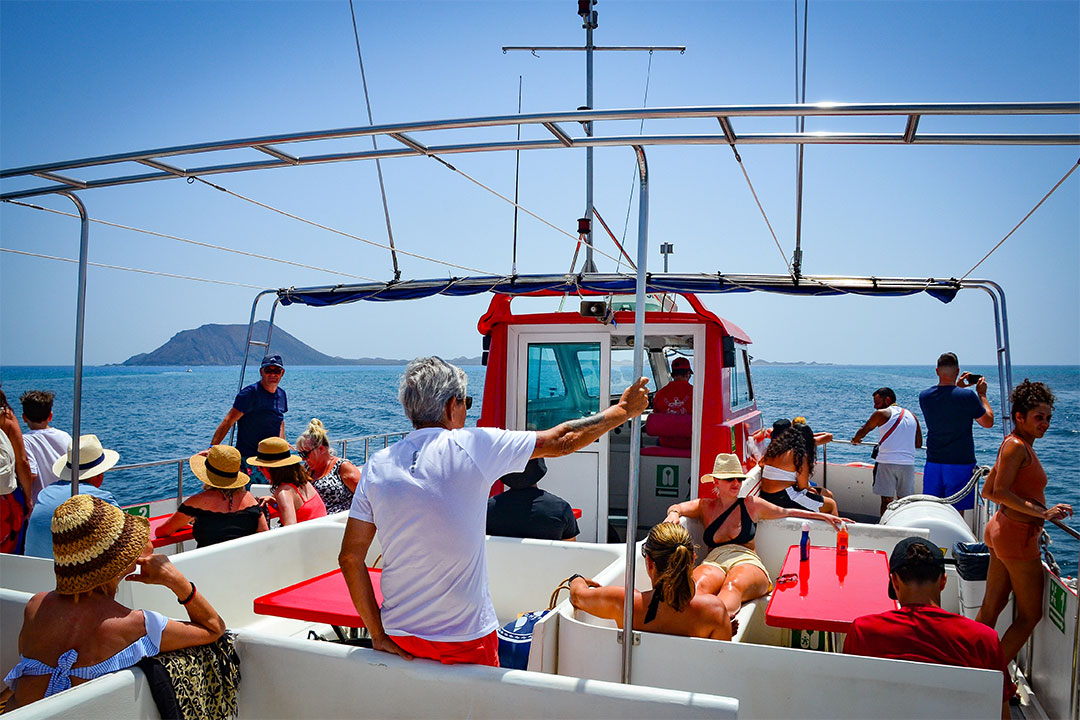
Lobos can only be reached by boat from the port of Corralejo, in the north of Fuerteventura. On your own you can cross by ferry or speedboat, return trip, in about 20 minutes. In winter there are several morning departures, and more in summer.
Plan your return boat carefully: it's the only way off the island. And if you drive to Corralejo, leave in good time, as parking near the port is hard in high season.
What to see
Everything on Lobos is done on foot, along marked trails. When you arrive, it's worth stopping at the Interpretation Centre by the jetty to understand the islet. It usually opens from 11:00 to 15:30, with small changes depending on the season.
- Playa de La Concha: a cove of pale sand and turquoise water, the best-known image of Lobos.
- El Puertito and its lagoons: natural pools of calm, shallow water, ideal for swimming with children.
- Montaña de La Caldera: the island's old volcano and its highest point, at 127 metres. The climb is short but steep, and from the top you can see Fuerteventura and Lanzarote.
- Martiño lighthouse: at the northern tip, first lit in 1865, at the end of the longest walk.
- Las Lagunitas: a salt marsh where many birds stop.
There's a circular route you can do in full or in sections. If you only have half a day, choose: either the beach at La Concha and El Puertito, or the walk up to La Caldera.
Tips and rules
- Water and food: there are no fountains. There's a small restaurant at El Puertito, but it's best not to rely on it.
- Sun: there's almost no shade. Bring sun cream, a hat and sunglasses.
- Comfortable shoes for the dirt and stone trails.
- A snorkel mask: the water is very clear.